
Grading the 1930 Penny Accurately
High 1930 penny value encourages counterfeit production.
Melbourne Mint utilized standard blanks for this specific production run.
High copper content in the alloy causes surface susceptibility to oxidation.
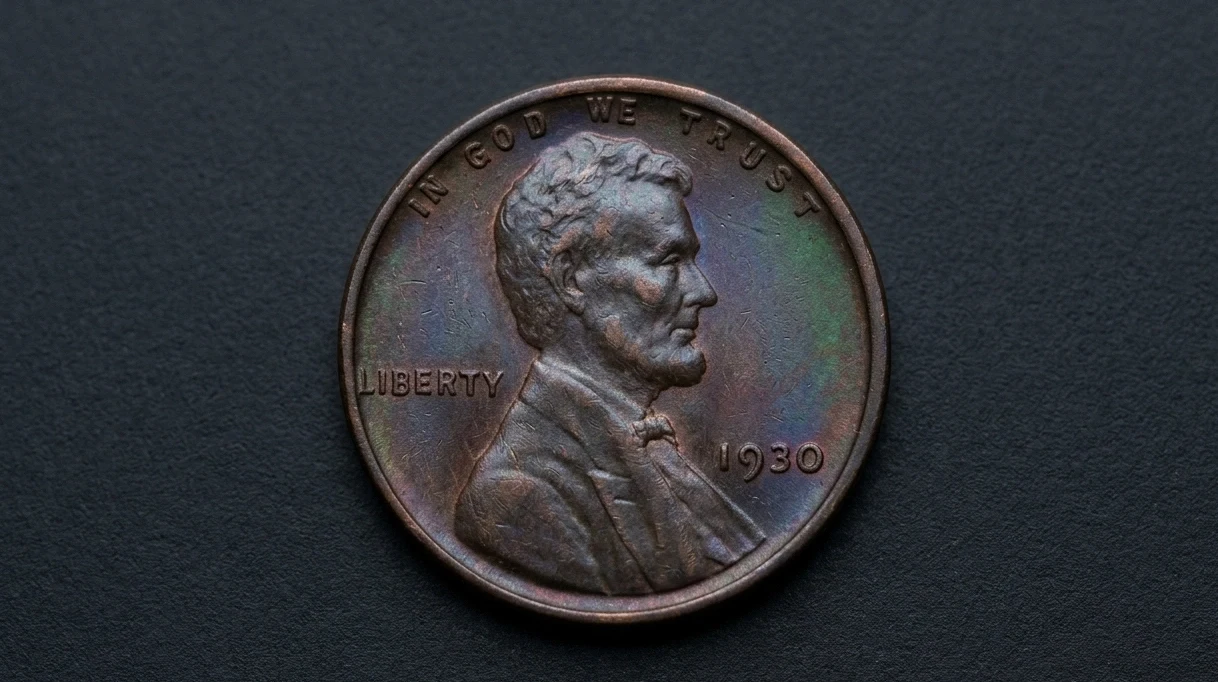
| Parameter | Value |
| Denomination | 1 Penny |
| Year | 1930 |
| Composition | 97% Red Metal, 2.5% Zinc, 0.5% Tin |
| Total Mass | 9.45 grams |
| Diameter | 30.80 millimeters |
| Thickness | 1.50 millimeters |
| Edge Type | Plain |
| Mintage | 1200 – 1500 units |
Hierarchy of Preservation States
Evaluation systems rely on visual markers found on the obverse and reverse.
Sheldon Scale serves as the primary tool for professional verification.
- About Good
Date appears faint. Rim merges with the coin field. Legend letters show significant rubbing
- Good
Date remains fully readable. Rim stands separate from the field. Central portrait elements stay flat
- Very Good
Main crown details become distinguishable. Pearl lines remain absent
- Fine
Six pearls in King George V’s crown show clearly. Central diamond remains worn flat
- Very Fine
Eight pearls and the central diamond appear fully. Minimal wear exists on the mustache
- Extremely Fine
Circulation traces appear almost non-existent. Relief edges remain sharp. Mint luster survives in protected areas
- About Uncirculated
Surface exhibits only minor friction traces on highest points. Full detail remains in hair and beard
Key Wear Zones on the Obverse
George V’s portrait contains critical points for grade determination.
Rubbing intensity on hair above the ear determines transition from Fine to Very Fine.
Monitoring crown condition → final grade definition:
- Lower crown line must stay sharp and continuous
- Pearls totaling eight units signify high preservation levels
- Center crown diamond requires sharp corners for grades above VF
- Band lines on the crown must remain separated by deep grooves
Market Value Formation Factors
Realization price depends on verified authenticity.
Possession of a professional grading service certificate increases asset liquidity.
Factors → Price Consequences:
- Corrosion presence → Value reduction by 40% – 60%
- Chemical cleaning traces → Price drop by 50%
- Mechanical rim nicks → Discount of 15% – 20%
- Even patina → Price premium of 10%
Record Auction Sales
Trading history includes transactions involving coins of exceptional preservation.
Proof versions represent a distinct market segment.
Significant transaction list:
- 2011: Proof version realized for $1,150,000
- 2019: Specimen in MS62 condition sold for $595,000
- 2024: Extremely Fine state reached the $125,000 mark
- 2026: Latest recorded Fine sale at $28,200
Fraud Detection Methods
Testing requires use of electronic scales and microscopes.
Technical originality indicators:
- Digit 0 in the date possesses a specific leftward tilt
- Inner part of digit 0 appears oval rather than round
- Placement of digits 193 relative to the edge matches the 1920s matrix
- Mass must not deviate from the standard by more than 0.2 grams
Utilizing spectral analysis of metal composition excludes modern copies.
Applying a coin scanner app free reveals digit soldering traces.
Often, fraudsters utilize 1930 pennies from other countries or alter dates on 1920 Australian pennies.
Surface Damage Classification
Every external impact gets recorded during grading.
Evaluation proceeds considering natural metal aging.
Defect types:
- Micro-scratches Resulting from contact with other coins in bags. Permissible for mid-range grades
- Oxidation spots Outcome of improper storage in humid environments. Reduces visual appeal
- Relief contamination Organic particle accumulation in letters. Removable only via professional restoration
- Fingerprint traces Oil deposits causing local color changes. Dangerous for coins without patina
Comparative Analysis with 1920s Mintage
The 1930 penny possesses visual differences from previous years.
Melbourne Mint applied updated obverse dies.
| Production Year | Average Mintage (millions) | Rarity Scale 1-10 |
| 1925 | 0.12 | 7 |
| 1926 | 2.15 | 2 |
| 1927 | 3.48 | 1 |
| 1930 | 0.0015 | 10 |
Low probability of finding the coin in circulation remains confirmed by 1960s withdrawal statistics.
Only 1 unit per 100,000 checked pennies belonged to the 1930 issue.
Asset Storage Recommendations
Metal requires isolation from the external environment.
Maintaining temperature regimes prevents dark spot growth.
Instructions:
- Use acid-free holders
- Exclude storage in PVC albums
- Maintain air humidity below 30%
- Avoid sharp temperature fluctuations
Correct storage → preservation of initial grade for decades.
Luster loss over one year of improper storage totals up to 15% of surface area.
Investment Demand Structure in 2026
Private investor share in the rare Australian coin segment has increased.
Institutional funds view the 1930 penny as a hedge instrument.
Demand distribution by participant type:
- Private collectors: 65%
- Investment funds: 20%
- Dealers and auction houses: 15%
Annual offering volume at public auctions continues to shrink.
Decreasing supply causes price growth acceleration for VF and higher specimens.
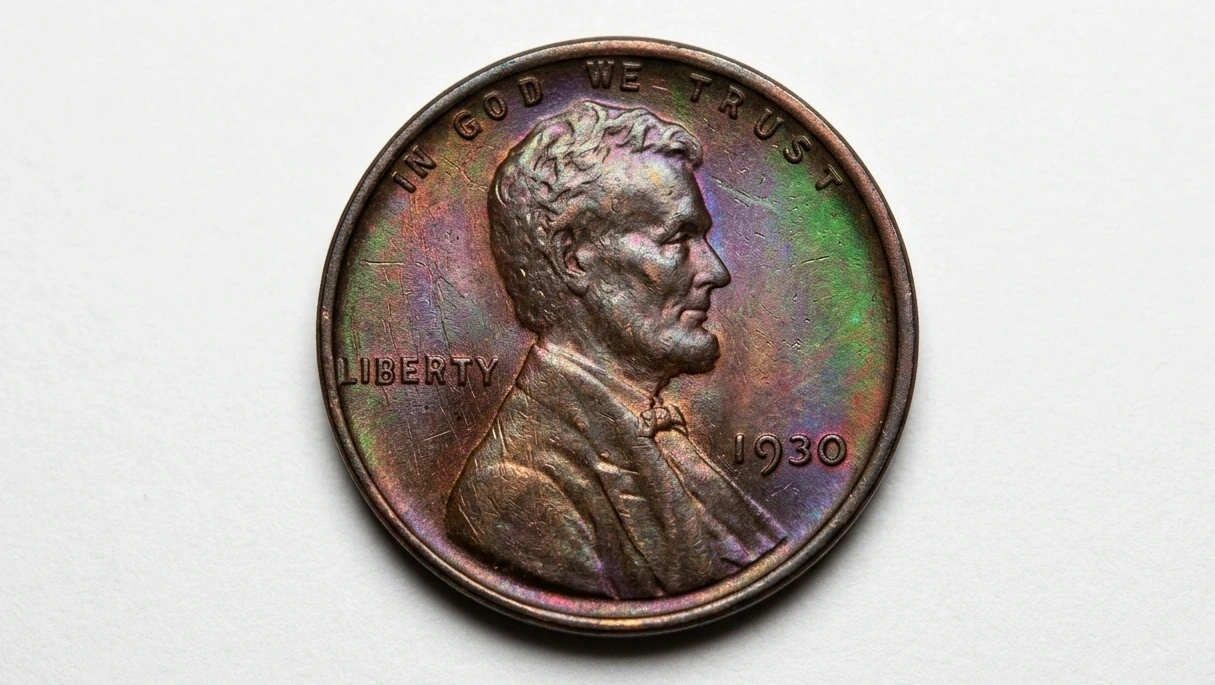
PCGS and NGC Professional Verification
A coin appraisal app free certification ensures grade standardization.
But for the PCGS and NGC, the process includes authenticity verification and digital code assignment.
Encapsulation advantages:
- Physical impact protection
- Authenticity guarantee for the buyer
- Resale procedure simplification
- Online registry record availability
Coins in plastic slabs sell 25% faster than unprotected counterparts.
Letter and Digit Geometry in the Legend
Fonts on the 1930 coin possess unique characteristics.
Spacing between letters in the word AUSTRALIA remains constant.
Legend check:
- Bottom part of letter L aligns horizontally
- Crossbar in letter A remains on one line throughout the word
- Dot after the word PENNY sits exactly at the letter height center
Geometry deviations in font indicate crude matrix origin.
Patina Influence on Final Score
Even brown coating remains natural for century-old metal coins.
Bright red color in 2026 occurs extremely rarely.
Color classification:
- BN (Brown) Full brown surface. Most common type
- RB (Red-Brown) Presence of 5% – 90% original red color. High price premium
- RD (Red) Over 90% red color. Virtually non-existent for the 1930 year
Artificial blackening presence becomes visible under side lighting.
Production Technology and Strike Defects
Melbourne Mint operated under resource-saving conditions.
Weak strikes in the central reverse part may exist.
Original strike signs:
- Clear rim composed of small beads
- Absence of metal flows on the field
- Smooth background surface without casting traces
Weak pearl strikes sometimes get mistaken for wear.
Distinction remains established by analyzing protected coin fields.